
 en
en
 Español
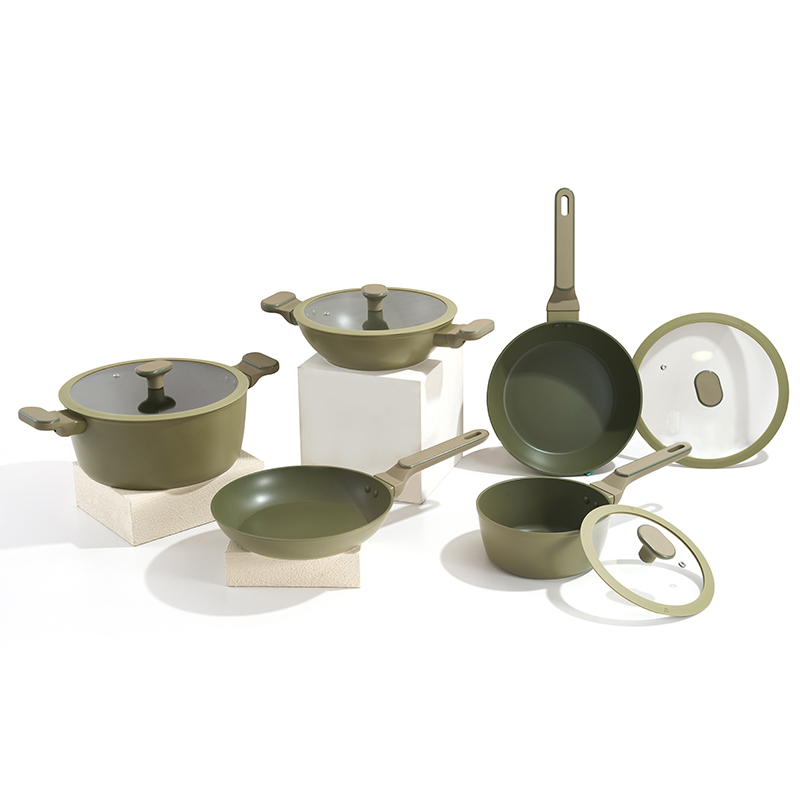
This cookware set features a non-stick coating, even heat conduction, and multi-...
See Details
What are the "taboos" of using aluminum pots? What should not be cooked in an aluminum pot?
Date:Feb 28, 2026
The biggest weaknesses of aluminum pots are their susceptibility to acids, alkalis, scratches, and dry heating. Therefore, several types of dishes and cooking methods should be avoided:
Avoid prolonged cooking or storing acidic foods: such as tomatoes, stir-fried cabbage with vinegar, lemon juice, hawthorn sauce, etc. An acidic environment will accelerate the destruction of the protective film on the aluminum oxide, leading to increased aluminum ion dissolution.
Avoid cooking or storing alkaline foods: such as pickled foods, preserved eggs, porridge cooked with alkaline water, etc. Strong alkaline substances will also corrode the oxide layer of the aluminum pot, causing it to lose its protective function.
Avoid high-temperature frying and dry heating: Aluminum has a low melting point (approximately 660℃). Dry heating an empty pot or frying over high heat can easily cause the pot to deform or even burn out. High temperatures will also make aluminum more reactive, increasing the risk of migration.
Avoid using metal spatulas and steel wool: Using metal spatulas to collide and rub against aluminum pots, or scrubbing vigorously with steel wool, will physically damage the crucial protective film of aluminum oxide, exposing the aluminum inside.
Recommended Articles
Product Category
Related products
-
-
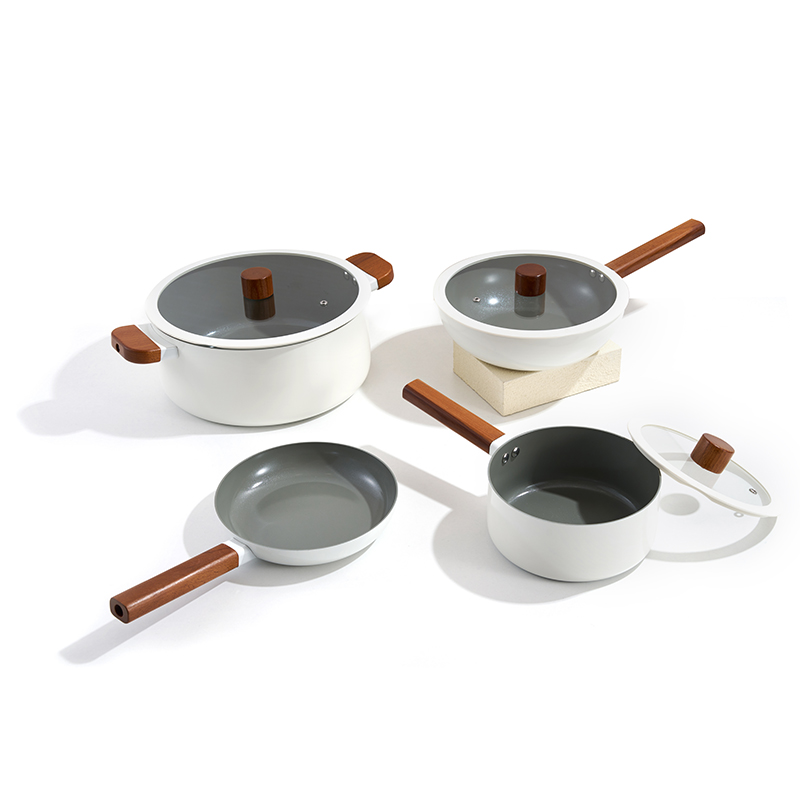
This cookware set has a ceramic non-stick inner liner, a heat-resistant wooden h...
See Details -
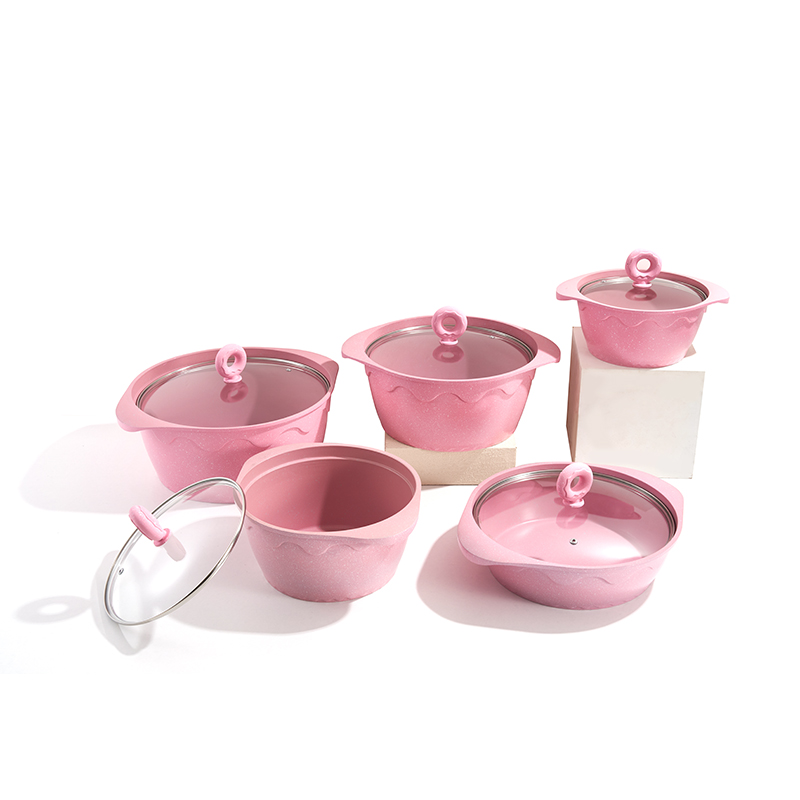
This cookware set is made of food-grade non-stick material, with a unique eye-ca...
See Details -
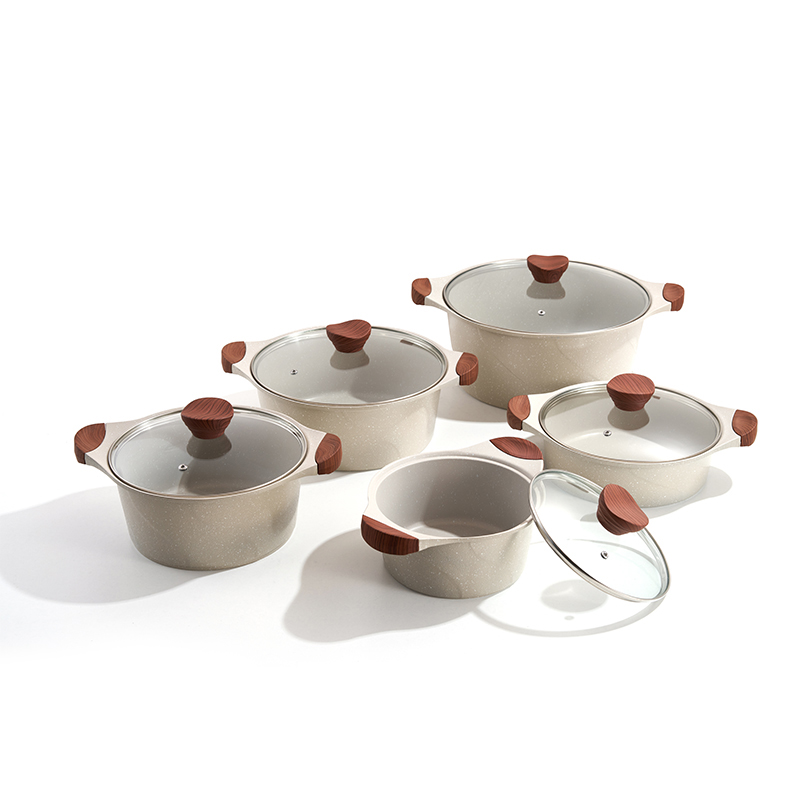
This off-white cookware set is made of wear-resistant non-stick material, with w...
See Details
Whether you're looking for bulk purchases or have any custom requirements, We are here to offer the best
solutions for you.
tiffany.zhong@echocn-trading.com
PHONE
+86-19561173975
+86-19557020621 (Hazel Wu)
ADD
Room 301, Unit 3014, No. 175 Qifeng Avenue, Wenqiao Town, Taizhou, Zhejiang, China
Fill Out the Form for More Information
Copyright © Zhejiang Echo Industry And Trade Co., Ltd.
All Rights Reserved.

China Cookware Set Manufacturer